What Are We Listening For?
Music has always been part of my everyday life. Not something I set aside time for, but something that finds its way into whatever I'm doing.
Jazz in the morning. Usually instrumental Afro-jazz with lo-fi and R&B influences. Something with enough rhythm to help me focus without demanding too much attention.
R&B when I'm cleaning. Soul music when I need a change in mood.
And on flights, meditation sounds to settle in, block out the noise, or lose myself in a book.
Sometimes I choose music based on how I'm feeling. Other times, I choose it because of how I want to feel.
Lately, I've been thinking more about that second kind of choice.
We usually talk about music as entertainment. But it carries memories, connects us to culture, creates shared experiences, and sometimes says what we haven't quite found the words for.
I've also noticed how easily we settle into familiar sounds. With so much music available, I still find myself surprised when someone hasn't heard a particular artist or style. Then I remember how much music I've probably never explored myself.
Even the algorithms that introduce us to something new often keep us close to what we already enjoy.
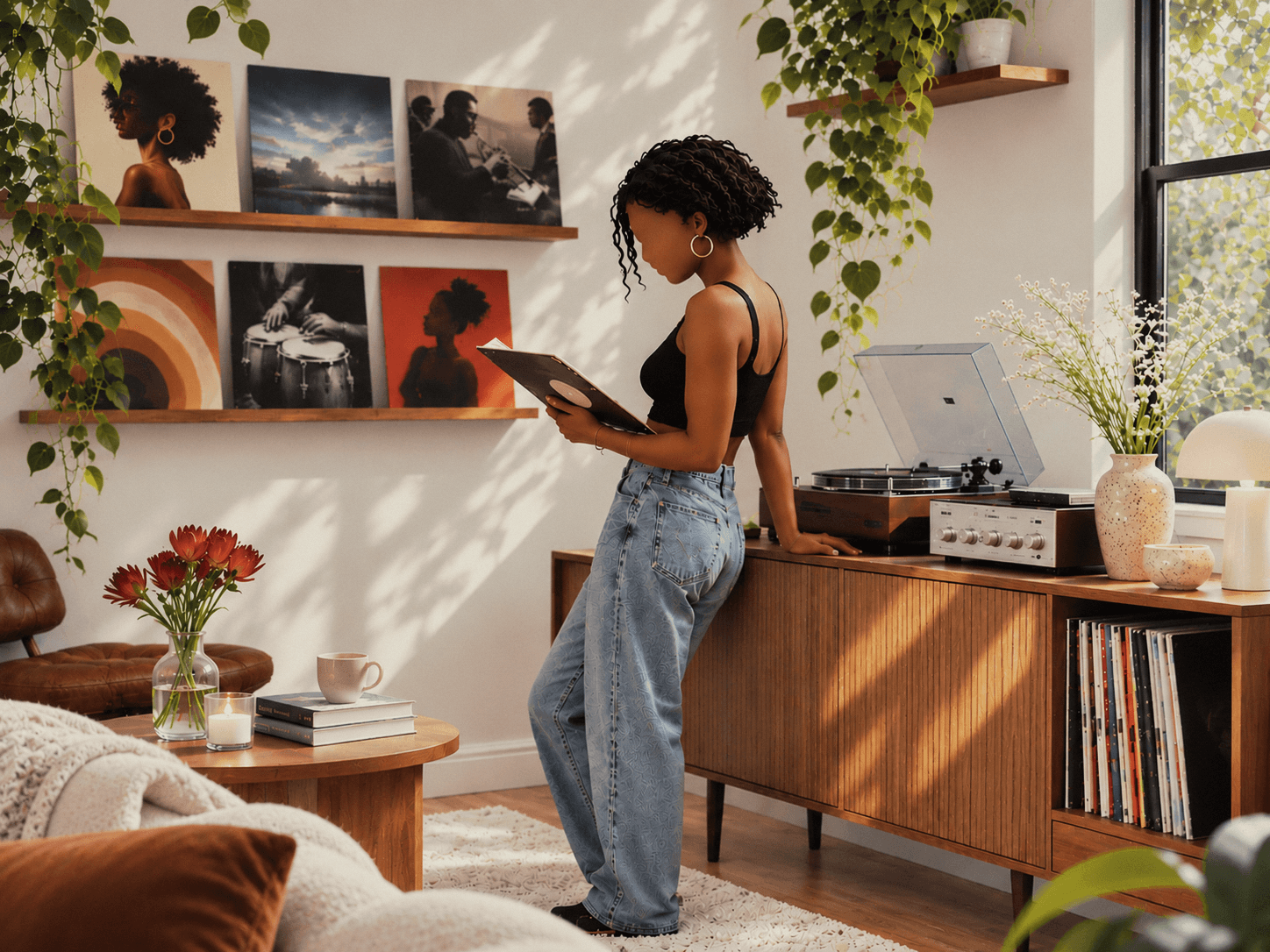
One of my favorite discoveries lately has been an AI-generated Afro-jazz channel on YouTube. It plays in my home so often that when it's quiet, something feels missing.
It's interesting to think that something created through technology can become such a familiar part of a physical space.
There's a growing body of research on music's relationship with health and well-being. A 2019 World Health Organization review of the arts and health found evidence that arts engagement, including music, can play a role in supporting well-being. The National Institutes of Health summarizes studies suggesting that music-based activities may help with stress and anxiety in some situations, while noting that more rigorous research is still needed.
The effects also seem to depend on the person, the setting, and the kind of engagement: listening, playing, singing, or moving.
Listening to music is only one way we engage with it, and I'm especially interested in what happens when listening becomes an experience of its own.
What interests me most isn't only whether music makes us feel better. It's how differently we experience it.
A song that helps one person unwind might make someone else want to move. A familiar melody might bring comfort, while another brings back a memory. Sometimes listening is deeply personal. Other times, it's something we share with an entire room of strangers.
We have more access to music than ever, yet so much of our listening happens while we're doing something else. Working, driving, cleaning, scrolling.
The music is there. I'm not sure we always are.
I've become curious about what might happen if we made more room to listen intentionally. Not as a formal wellness practice. Just as another way of paying attention: to ourselves, to each other, and to the world around us.
Maybe the interesting question isn't only what music does for our health.
Maybe it's what becomes possible when we give ourselves the space to listen. And when we reach for a song, what are we actually listening for?
National Institutes of Health · NCCIH
Music and Health: What You Need To Know (opens in a new tab)World Health Organization (2019)
What is the evidence on the role of the arts in improving health and well-being? A scoping review (opens in a new tab)